Chasing cars with FPV drones.
When you have high speed action to shoot, nothing is as dynamic (or as fun) as FPV drone chase footage. It allows the audience to ride along the circuit without the limited POV of a helmet cam (or the shakes for that matter!).
This is often done with both pre-built consumer drones like the DJI Avata 2 or Avata 360, but also and sometimes more intensely with custom built FPV drones built from tank-strength carbon fibre frames and very high thrust motors and props.
Some of these very closely resemble racing drones (made for drone racing championships) and can reach speeds around 150km/h, perfect even for very fast sports car or superbike chases!
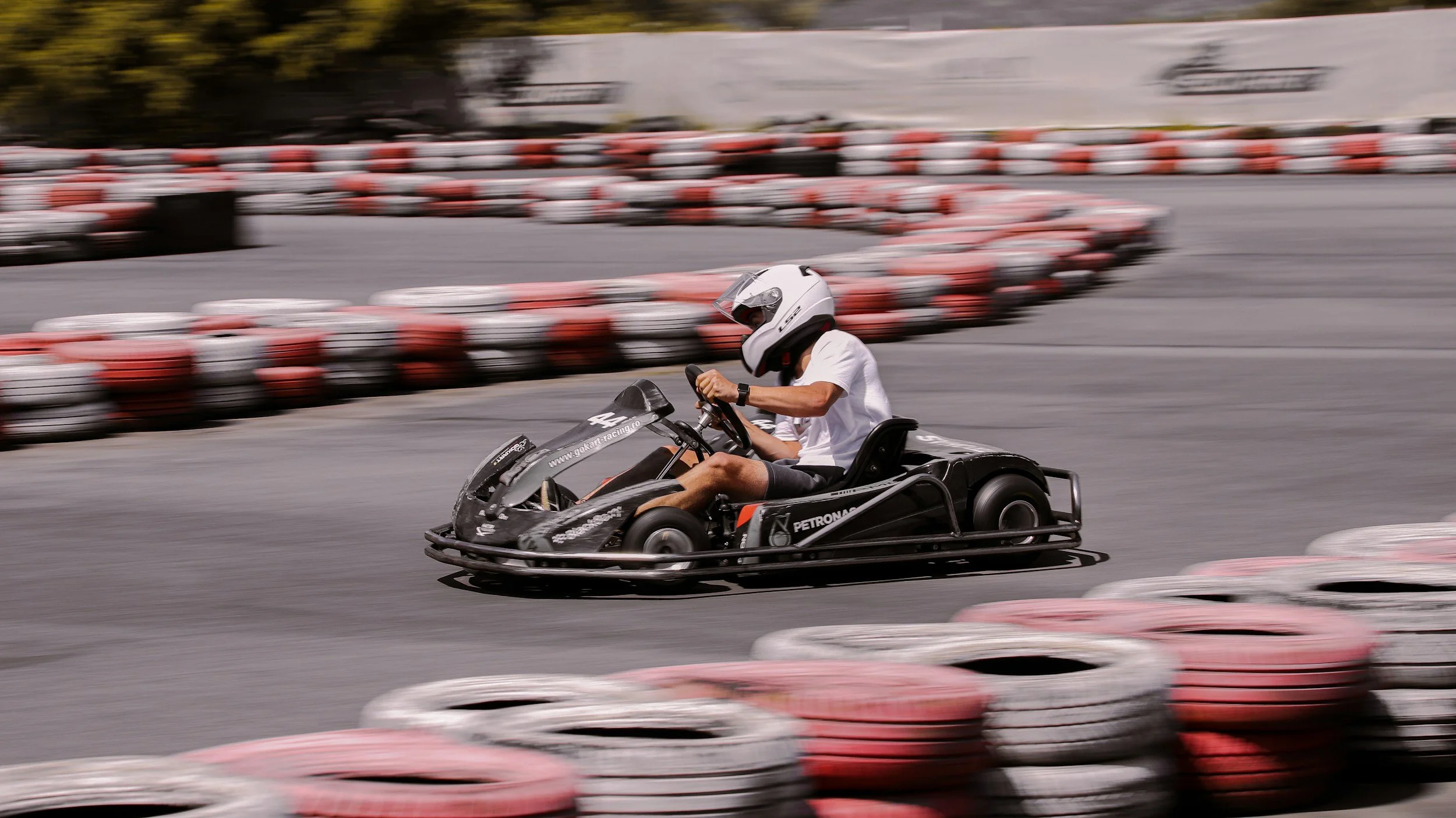
What about safety concerns? A less fun topic but a necessary one.
It depends on the drone. Consumer drones like the DJI drones have obstacle avoidance and are fully “ducted” (propellers encased by protective bumpers) so are quite safe.
Custom drones can either be “open prop” or “ducted”, where it really is a trade-off between preformance and safety.
The open prop drones could in theory clip the paintjob of that Porche you’re buzzing by at 2 inches distance, while a Cinewhoop (a ducted prop drone) would merely bump it lightly with its soft plastic rims. Hardly enough of an impact to cause any damage, especially not to us fleshy humans!
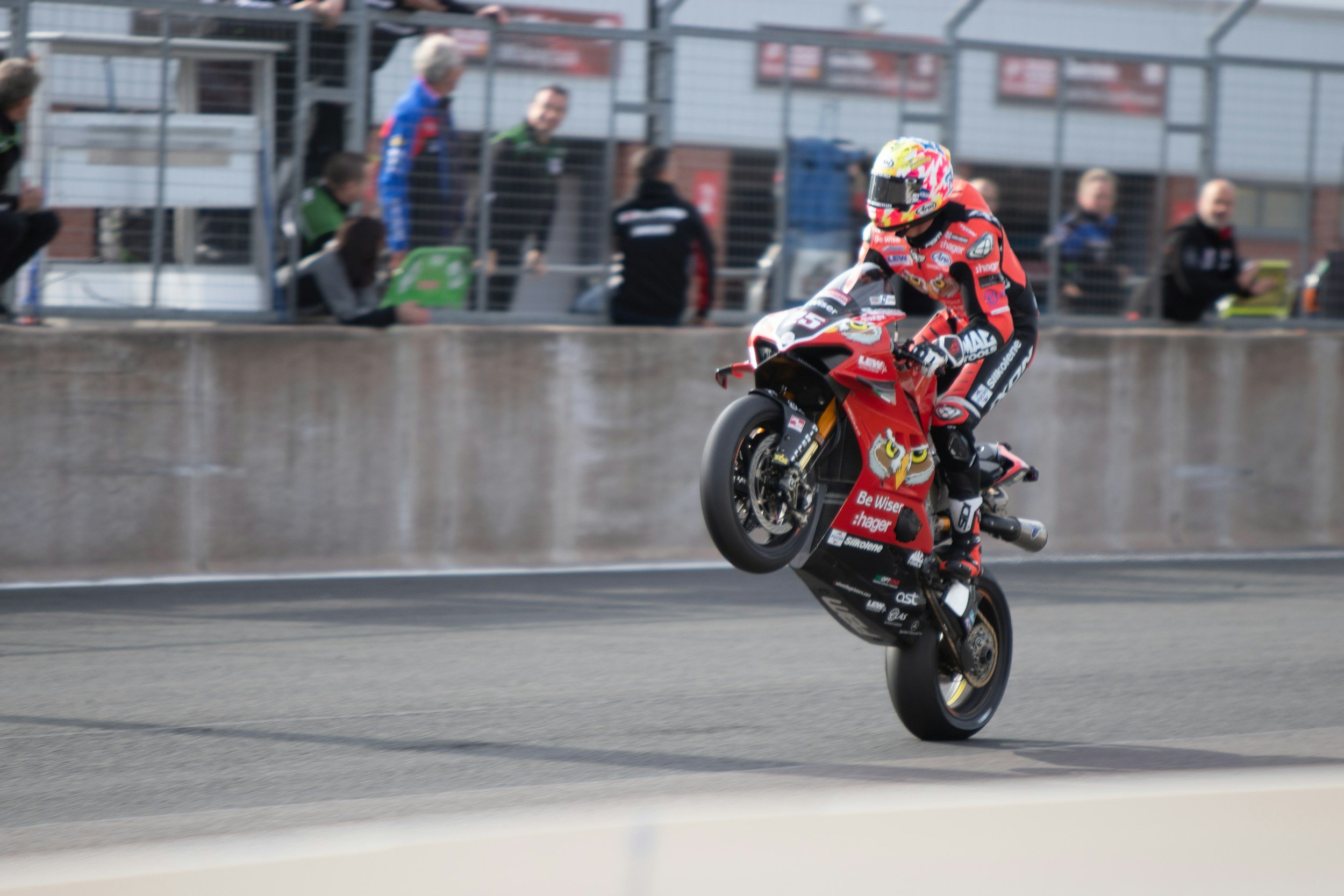
Don’t hit my wheel!
All in all the biggest factor for getting awesome race-day shots is plenty of practice and to only go for the risky close-ups when you have an exit plan.
For instance in this case, you absolutely do want to nail the shot of the drone swooping under the front wheel, but we would only go for it if all other angles are open and clear to break off in case we need a hard abort a second later.
But in the world of FPV, the bold are rewarded!